

B2C & e-commerce
House of Spells
Shopify rebuild: checkout, EPOS & inventory you can trust
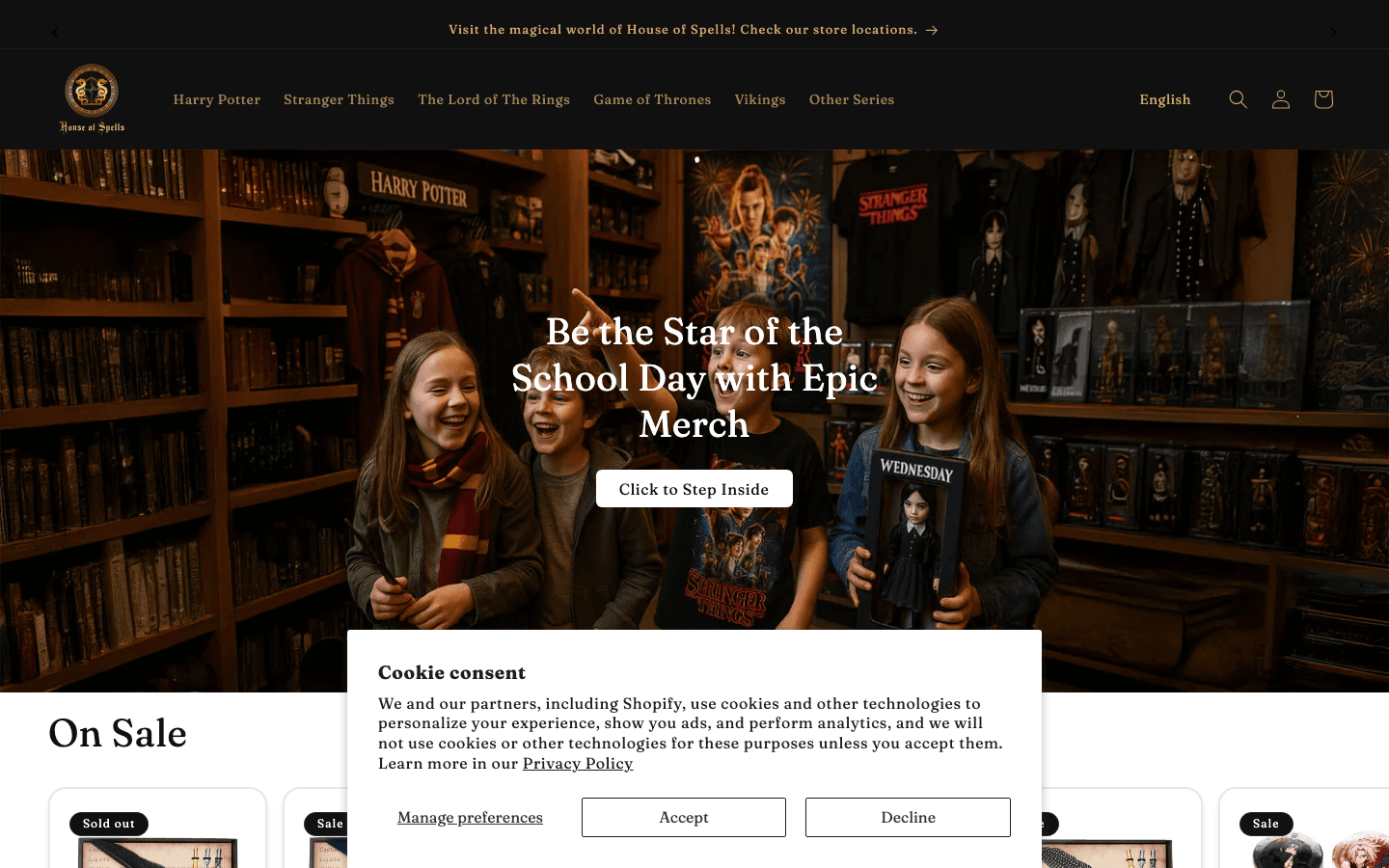
House of Spells sells licensed collectibles and fan merchandise to consumers online. Their previous custom store—built elsewhere—was unstable: frequent crashes, weak UI/UX, broken checkout, and inventory chaos. They needed a faster path to something dependable, so the programme moved to Shopify and rebuilt the storefront and operations from the ground up.
Industry: Licensed retail & collectibles
Three-month engagement with multiple design and build iterations. After handover, Codestern trained staff on Shopify admin, back-office workflows, and inventory management— including integration with the retailer’s EPOS so online and in-store stock stay aligned.
The challenge
- The legacy bespoke site failed in production: outages and instability undermined campaigns and day-to-day trading.
- Checkout and core commerce paths did not work reliably, so revenue and customer trust leaked at the worst moments.
- Stock and fulfilment logic was unreliable; teams could not trust what the website said was available.
- Overall UX did not reflect the quality of the brand or catalogue—navigation, merchandising, and mobile behaviour needed a full rethink.
- The business needed to move quickly: a strict “sooner the better” timeline without compromising on EPOS-linked inventory accuracy.
What we did
- After weighing options against the deadline, Shopify was chosen as the commerce platform; Codestern rebuilt the B2C experience from scratch rather than patching the old stack.
- Delivered a full consumer store: page architecture, content, creative treatment, and bespoke sections where needed—including SEO-oriented landing and content pages as priorities emerged.
- Implemented payments and a robust checkout flow on Shopify’s rails, replacing the broken paths from the previous build.
- Integrated the retailer’s EPOS so inventory and availability can stay consistent between systems, reducing oversells and manual firefighting.
- Iterated with stakeholders through multiple passes until UI/UX, catalogue presentation, and back-office workflows matched how the team actually runs the business—then trained staff on admin, inventory, and day-to-day store operations.
Results
Sales momentum post-rebuild
Following launch, trading performance improved over a three-month window compared with the prior period on the old platform—customers could complete purchases instead of hitting dead ends.
Stronger retention and confidence
A stable site, clearer browsing, and working checkout support repeat purchase behaviour; shoppers encounter fewer reasons to abandon.
Faster, cleaner fulfilment loop
Orders move through processing more quickly with fewer manual workarounds. Inventory stays more accurate thanks to EPOS-aligned stock and a Shopify admin the team is trained to run.
Our old site was a liability—crashes, broken checkout, and stock that never matched reality. Moving to Shopify with Codestern was a full reset: we finally have a store that stays up, looks the part, and talks to our EPOS. The team knows how to run it day to day, and we’re seeing the difference in sales and repeat customers.
Focus areas
- Shopify
- B2C e-commerce
- EPOS integration
- Checkout & payments
- Custom pages & SEO
- Inventory operations