
June 2024
E-commerce best practices for small business
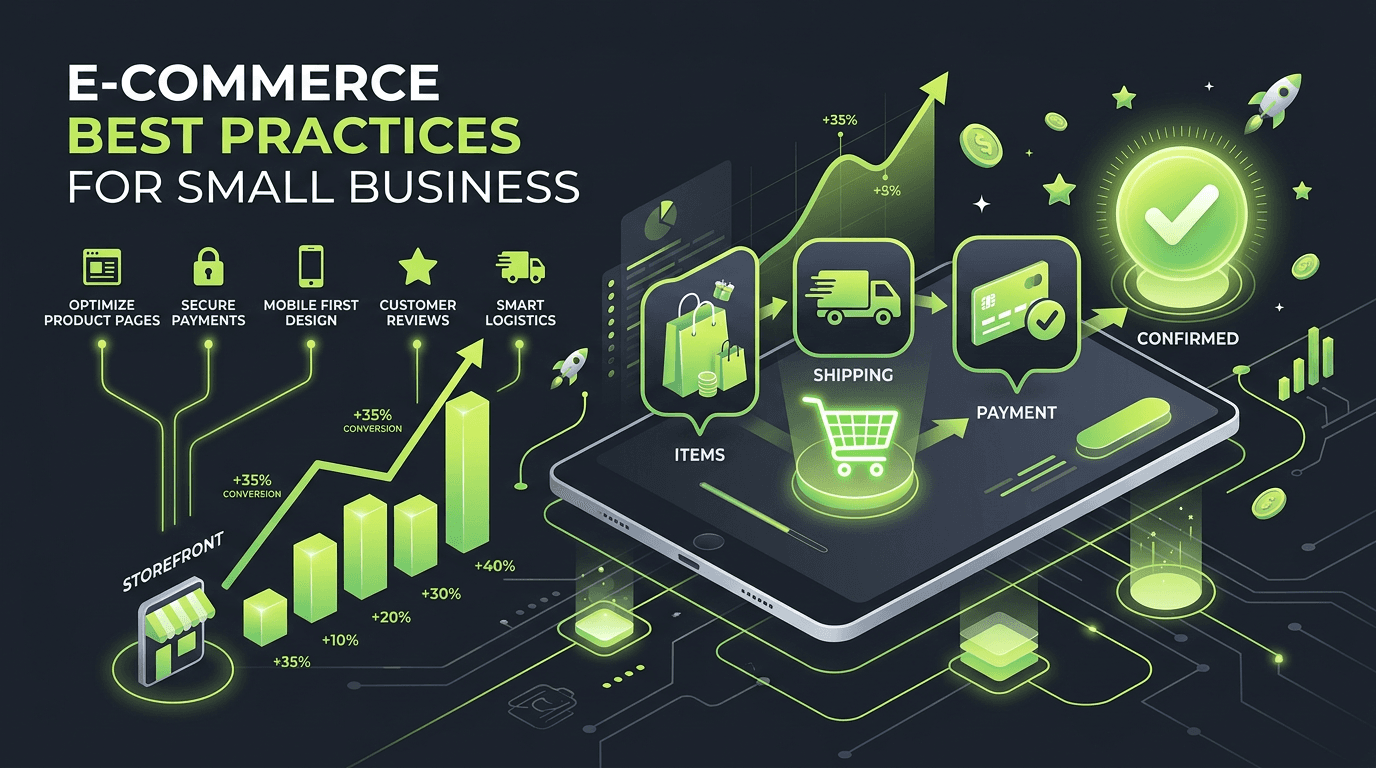
Small businesses can compete online with the right foundations. A clear checkout flow — fewer steps, guest checkout, saved payment methods — reduces abandonment. Trust signals (badges, reviews, clear returns policy) matter more when you're not a household name.
Product pages need clear images, descriptions, and stock status. Fast loading is critical: every second of delay costs conversions. Mobile optimisation is non-negotiable; many purchases happen on phones. Integrate with your existing tools: accounting, inventory, email marketing.
Start simple. A Shopify or WooCommerce store with a solid theme can outperform a custom build that's over-engineered. Add features as you grow. Focus on what drives sales: product quality, trust, and a frictionless checkout.
Checkout abandonment is high — often 70% or more. Reduce friction: allow guest checkout, offer multiple payment options (card, PayPal, buy now pay later), and show progress. Display security badges. Reassure users their data is safe. Consider exit-intent popups or abandoned cart emails to recover lost sales.
Product photography matters. Use consistent lighting and backgrounds. Offer multiple angles and zoom. Include size guides for apparel. Video can help for complex products. User-generated photos and reviews build trust and reduce uncertainty.
Post-purchase experience affects repeat business. Send order confirmation and shipping updates. Make returns easy to find and process. Follow up with a review request. A smooth experience after the sale encourages customers to come back.