
July 2024
Content strategy for small business websites
Content strategy doesn't mean a full-time blog. Focus on pages that serve your business: clear service descriptions, case studies or testimonials, and an FAQ that answers common objections. A few well-written pages outperform dozens of thin posts.
If you blog, aim for consistency over volume. One strong post per month beats four rushed ones. Topics should answer real questions your customers ask. Use analytics to see what content drives traffic and leads. Update existing content when it goes stale — search engines reward fresh, accurate information.
Outsource when it makes sense: SEO-focused copy, technical documentation, or design-heavy content. Keep your voice in strategy and key messaging. Your content should reflect your expertise and build trust with your audience.
Start with your core pages. Home, services, about, and contact need to be clear and compelling. Add an FAQ that addresses objections and common questions. Case studies or client stories provide proof. These pages work harder than most blog posts.
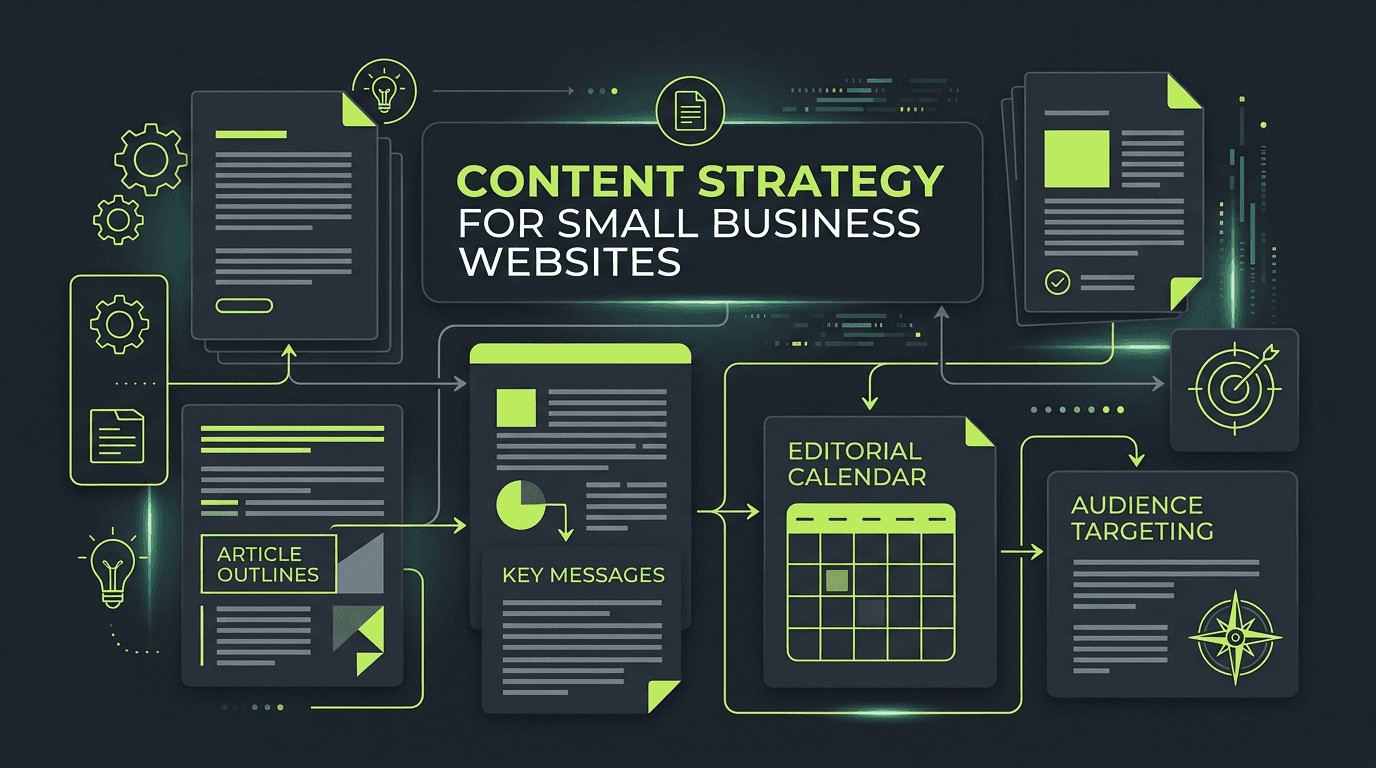
When you do create ongoing content, plan ahead. A content calendar helps maintain consistency. Batch writing saves time. Repurpose content: a blog post can become a newsletter, social posts, or a PDF guide. One piece of research can fuel multiple formats.
Measure what works. Track which pages drive traffic, leads, and conversions. Double down on what performs. Update or retire what doesn't. Content strategy is iterative — learn from your audience and adjust.